A field guide for curious explorers ages 6–12

Small paws.
Big wild world.

Track remarkable wild cats across forests, wetlands, mountains and deserts—and discover why the best place to meet them is in the wild.
FIELD NOTE #01There are about 40 wild cat species. Most are not lions or tigers—they are small, secretive and perfectly made for their homes.
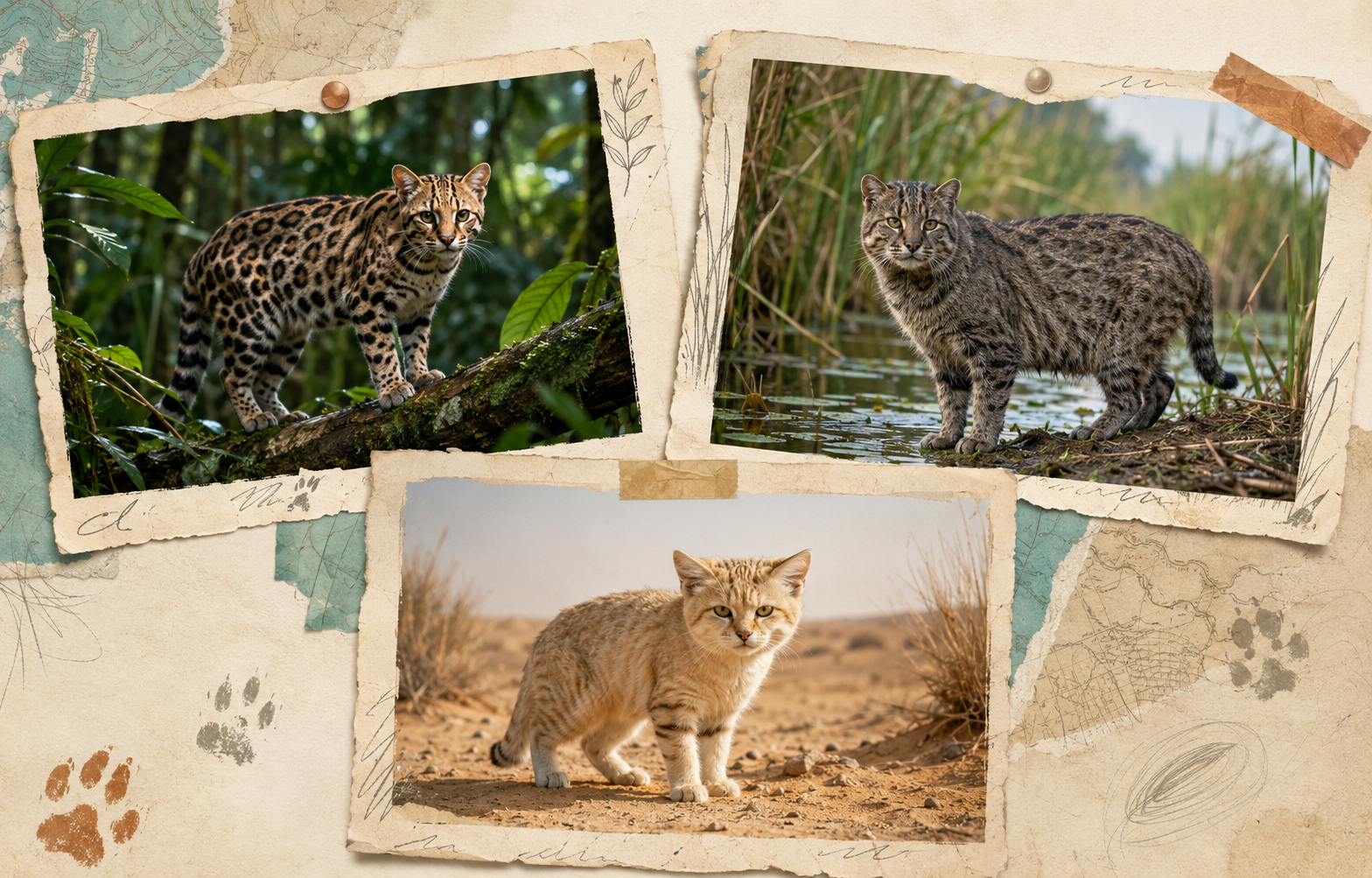
Field guide photographs of an ocelot in a rainforest, a fishing cat beside a wetland, and a sand cat in the desert
OCELOTRainforest shadow
FISHING CATWetland swimmer
SAND CATDesert explorer

Open the field guide

Meet six amazing wild cats

Choose a cat to uncover its habitat, special skills and a surprising fact.

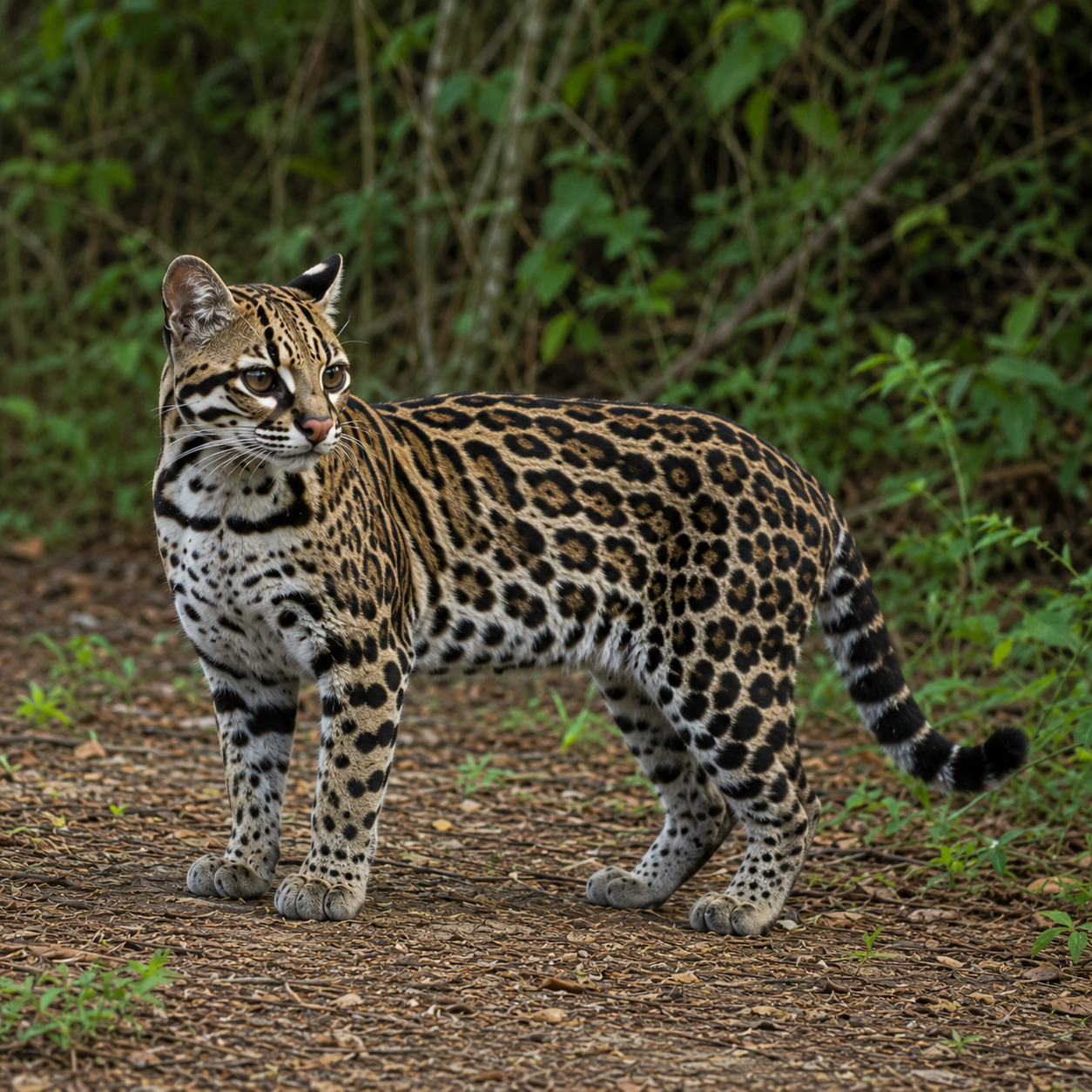
A wild ocelot with chain-like dark markings standing in a leafy rainforest habitat
Wild & freeOcelot

Species field card

Ocelot

Rainforests & thorn scrub

The dark lines around an ocelot’s eyes may help reduce glare—like a natural pair of sunglasses!

Home range
The Americas
Super skill
Climbing & camouflage

Choose your cat

Which wild cat is calling you?

Search for a favorite, follow an alphabet trail, or let the Cat Compass choose your next discovery.

🐾39 cats on this trail
A

Amur Leopard

Panthera pardus orientalisOpen field notes
A

Andean Mountain Cat

Leopardus jacobitaOpen field notes
A

Asiatic Golden Cat

Catopuma temminckiiOpen field notes
B

Bay Cat

Catopuma badiaOpen field notes
B

Black-footed Cat

Felis nigripesOpen field notes
B

Bobcat

Lynx rufusOpen field notes
C

Canada Lynx

Lynx canadensisOpen field notes
C

Caracal

Caracal caracalOpen field notes
C

Cheetah

Acinonyx jubatusOpen field notes
C

Chinese Mountain Cat

Felis bietiOpen field notes
C

Clouded Leopard

Neofelis nebulosaOpen field notes
C

Cougar

Puma concolorOpen field notes
F

Fishing Cat

Prionailurus viverrinusOpen field notes
F

Flat-headed Cat

Prionailurus planicepsOpen field notes
G

Geoffroy’s Cat

Leopardus geoffroyiOpen field notes
G

Golden Cat (African)

Caracal aurataOpen field notes
G

Guigna (Kodkod)

Leopardus guignaOpen field notes
I

Iberian Lynx

Lynx pardinusOpen field notes
I

Iriomote Cat

Prionailurus bengalensis iriomotensisOpen field notes
J

Jaguar

Panthera oncaOpen field notes
J

Jaguarundi

Herpailurus yagouaroundiOpen field notes
J

Jungle Cat

Felis chausOpen field notes
L

Leopard

Panthera pardusOpen field notes
L

Leopard Cat

Prionailurus bengalensisOpen field notes
L

Lion

Panthera leoOpen field notes
M

Margay

Leopardus wiediiOpen field notes
M

Marbled Cat

Pardofelis marmorataOpen field notes
N

Northern Tiger Cat

Leopardus tigrinusOpen field notes
O

Ocelot

Leopardus pardalisOpen field notes
P

Pallas’s Cat

Otocolobus manulOpen field notes
P

Pampas Cat

Leopardus colocolaOpen field notes
R

Rusty-spotted Cat

Prionailurus rubiginosusOpen field notes
S

Sand Cat

Felis margaritaOpen field notes
S

Serval

Leptailurus servalOpen field notes
S

Siberian Lynx

Lynx lynxOpen field notes
S

Snow Leopard

Panthera unciaOpen field notes
S

Southern Tiger Cat

Leopardus guttulusOpen field notes
T

Tiger

Panthera tigrisOpen field notes
W

Wildcat

Felis silvestrisOpen field notes
Want the complete scientific species list?Visit Big Cat Rescue’s Cat Species page →

The most important lesson

Wild cats belong to the wild.

A cage may let people look at a cat, but it cannot give that cat a wild life. Wild cats need room to roam, choices to make, natural families, and the chance to use every skill their bodies and minds were built for.

We can learn more—and show more kindness—through respectful tools such as remote cameras, wildlife documentaries, virtual reality and field scientists’ observations.

Test what you know
NOT FOR OUR AMUSEMENT
  • ✕ Cub holding and photo props
  • ✕ Tricks, shows and performances
  • ✕ Breeding cats for display
  • ✕ Calling captivity “education”
LEARN WITH RESPECT
  • ✓ Remote wildlife cameras
  • ✓ Protecting natural habitats
  • ✓ Books, films, VR and AR
  • ✓ Supporting field conservation

Explorer challenge

What would a wild cat choose?

Every good field explorer learns to see the world through an animal’s eyes. Choose the kindest answer.

Question 1 of 3
01

Where does a wild cat learn the skills it needs to survive?

Print, play, discover

Fieldwork for young explorers

Ready-to-use activities from Big Cat Rescue’s education collection.

Welcome to the teacher den

Bring the wild into your classroom—without bringing wildlife into captivity.

Flexible, classroom-ready resources for science, literacy, art, observation and compassionate conservation.

📚Browse the complete education libraryLesson plans, storybooks, coloring pages, puzzles, presentations and more
🐾

The wild cat explorer pledge

I will learn with wonder, share with kindness, and help wild cats live wild and free.

Explore again ↑